The global demand for durable, cost-effective waterproof apparel has led to a strategic shift in how procurement managers evaluate pvc raincoat suppliers. As weather patterns become more volatile, the reliance on synthetic polymers like PVC (Polyvinyl Chloride) remains high due to their absolute water impermeability and ease of fabrication.
However, the industry is currently facing a critical balance between material thickness, durability, and cost-efficiency. For commercial buyers, such as department stores and gift shops, the challenge lies in sourcing garments that offer sufficient protection without compromising the lightweight nature required for summer rainwear or promotional distribution.
This analysis examines the technical parameters of PVC rainwear production, the implications of material thickness on product lifespan, and a decision-making framework for selecting manufacturing partners capable of delivering consistent quality at scale.


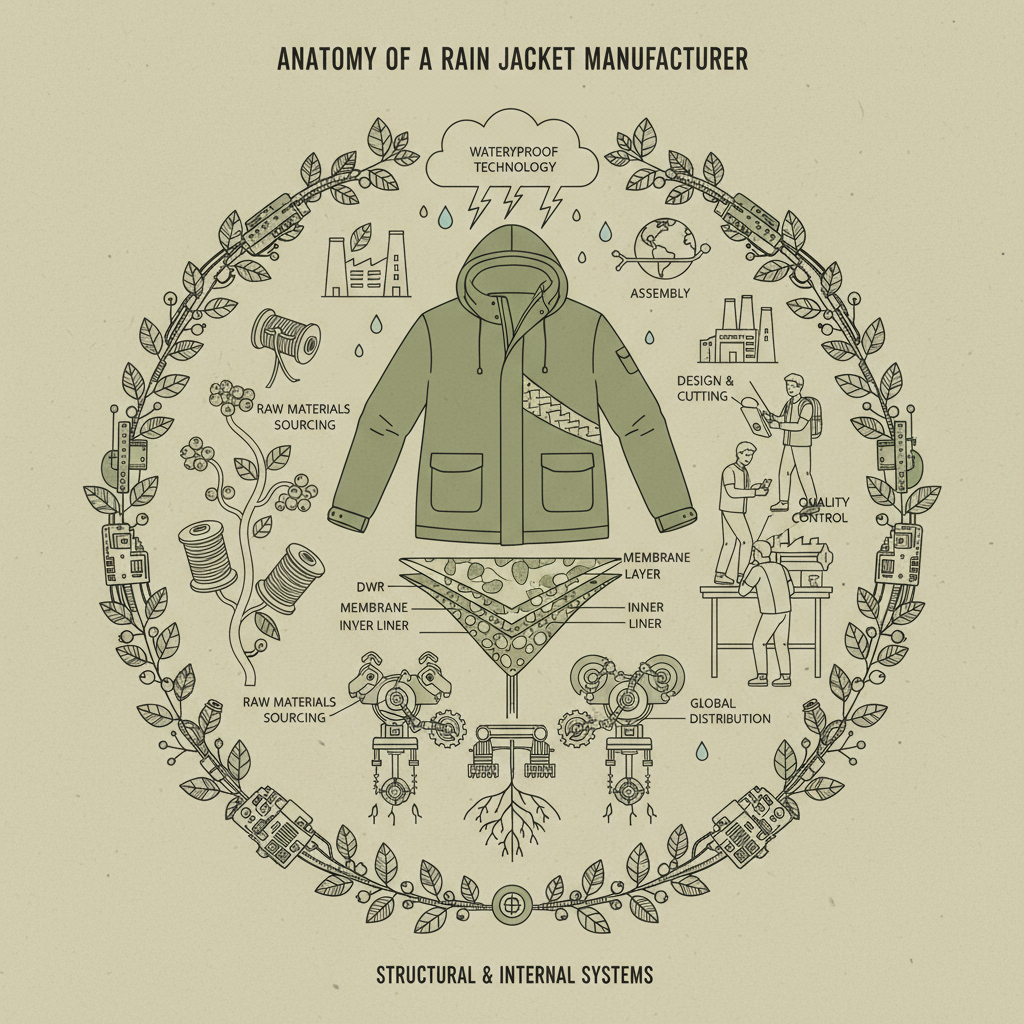
The fabrication of professional rainwear involves a complex sequence of cutting, printing, sewing, and stapling. High-grade PVC garments are produced using an extruded film process that ensures a non-porous surface, preventing water penetration at a molecular level.
To achieve commercial scalability, manufacturers utilize a complete production line that integrates strict quality control from material procurement to final packing. This systemic approach is essential for maintaining consistency across large batches, especially when dealing with customized logos and specific color requirements.
In the realm of PVC rainwear, the gauge or thickness of the material is the primary determinant of the product's durability and utility. Standard commercial grade PVC ponchos typically range between 0.10mm and 0.15mm. This specific range is engineered to optimize the trade-off between weight and tear resistance.
A thickness of 0.10mm is ideal for lightweight, portable rainwear often used in promotional events or as summer emergency gear. In contrast, 0.15mm provides a more robust barrier, offering increased longevity and resistance to punctures, making it more suitable for repeated use in outdoor environments.
Beyond thickness, the application of screen printing for custom logos must be handled with precision. The ink must adhere to the non-polar surface of the PVC without causing material brittleness or peeling, requiring specific temperature controls during the curing process.
Customization introduces several engineering variables that can impact the final quality of the garment. Sizing from XS to XXXL requires precise pattern cutting to ensure that the waterproof integrity of the seams is maintained regardless of the garment's dimensions.
Furthermore, the integration of various materials such as EVA and PEVA offers alternatives for buyers seeking different tactile properties or environmental footprints. However, each material requires a different sewing and bonding approach, necessitating a manufacturer with a versatile production line.
When selecting materials, buyers often compare PVC, EVA, and PEVA based on several engineering ratings. PVC is renowned for its absolute waterproofing and structural rigidity, while EVA is often preferred for its softness and flexibility, and PEVA is utilized as a more eco-friendly alternative.
The following assessment provides a normalized engineering rating for these materials across five key performance dimensions, helping procurement officers determine the most suitable substrate for their specific application.
For commercial entities like department stores, the deployment of PVC rainwear is typically seasonal. During the summer monsoon periods, the demand for lightweight, high-visibility ponchos increases. These products are often sold as impulse buys, meaning the packaging (such as individual PP bags) and the visual appeal of the custom printing are as critical as the technical specifications of the PVC itself.
In gift store scenarios, the focus shifts toward "reusable cheap" alternatives. Here, the 0.12mm to 0.15mm thickness is preferred to ensure the customer perceives the product as a value-added item rather than a single-use disposable. This necessitates a supplier capable of producing high-volume orders with tight lead times, often ranging from 10 to 20 days depending on quantity.
The industry is moving toward the integration of more sustainable polymer blends. While traditional PVC is highly effective, the development of phthalate-free PVC and the increased adoption of TPU (Thermoplastic Polyurethane) are emerging trends. TPU offers superior flexibility and environmental resistance, though at a higher cost point.
Additionally, automation in the cutting and stapling process is reducing human error in seam sealing. The shift toward "Industry 4.0" in garment manufacturing allows for more precise thickness control and reduced material waste, which directly lowers the cost for the end buyer without sacrificing quality.
We anticipate a growth in "smart" rainwear, where PVC is coated with hydrophobic nanotechnology to further enhance water shedding capabilities, reducing the weight of the garment when wet and improving the user experience in heavy precipitation.
Selecting the right partner among various pvc raincoat suppliers requires a structured evaluation of their production capacity and quality certifications. A supplier with a BSCI certificate, for instance, ensures a level of social compliance and operational standardization that is crucial for international exports to Europe and the USA.
Buyers should evaluate the supply ability (e.g., pieces per day) against their own peak demand cycles. A manufacturer capable of producing 2,000 pieces per day provides a reliable buffer for rapid restocking during sudden weather changes.
The following matrix compares different configuration profiles to guide buyers in selecting the appropriate rainwear specification based on their target market and intended use case.
| Configuration Type | Material Thickness | Durability Rating | Recommended Use Case |
|---|---|---|---|
| Basic Profile | 0.10mm PVC | Low-Medium | Promotional Events / Summer |
| Standard Profile | 0.12mm PVC | Medium | Department Store Retail |
| Heavy-Duty Profile | 0.15mm PVC | High | Outdoor Work / Long-term Use |
| Eco-Friendly Profile | 0.12mm PEVA | Medium | Eco-conscious Markets |
| Flexible Profile | 0.10mm EVA | Medium-Low | Kids / Lightweight Gear |
| Premium Profile | 0.15mm TPU | Very High | Specialized Professional Gear |
For most commercial applications, a thickness between 0.10mm and 0.15mm is ideal. 0.10mm is best for lightweight, disposable, or summer-specific gear where portability is key. 0.15mm is recommended for reusable garments that need to withstand more frequent use and potential abrasion, providing a better balance of longevity and cost.
All three are waterproof, but they differ in physical properties. PVC is the most rigid and offers the strongest water barrier. EVA is softer and more flexible, making it comfortable but slightly more prone to punctures. PEVA is a non-chlorinated alternative to PVC, offering similar waterproofing but with a reduced environmental impact during production.
Yes, screen printing is compatible with all standard PVC thicknesses (0.10mm - 0.15mm). However, the ink adherence and visual clarity are slightly better on thicker materials (0.15mm) as they provide a more stable substrate that is less likely to warp during the printing and curing process.
Inspect the sealing method used. High-quality rainwear should use heat-sealing or precision stapling. Look for consistency in the seal line; any gaps, bubbles, or "cold spots" in the weld indicate potential leak points. A professional manufacturer will perform a pressure or water-drop test on batch samples to verify seam integrity.
Lead times vary by quantity. For orders up to 2,000 pieces, a lead time of approximately 10 days is standard. For orders between 2,001 and 10,000 pieces, it typically extends to 20 days. Orders exceeding 10,000 pieces are usually negotiated based on current factory capacity and material availability.
Evaluate their certifications (such as BSCI), their daily production capacity, and their quality control system. A reliable supplier should provide detailed material specifications, a clear production workflow (from cutting to packing), and a proven track record of exporting to regulated markets like the EU or USA.
The efficiency of PVC rainwear depends on the precise alignment of material thickness and intended application. While 0.10mm suffices for promotional use, the 0.15mm threshold is critical for products intended for repeated commercial use. The transition toward automated sealing and the exploration of TPU alternatives indicate an industry moving toward higher durability and environmental responsibility.
For buyers, the key to minimizing risk is partnering with manufacturers who integrate a full quality control loop and maintain a transparent production capacity. By utilizing a structured selection matrix, procurement officers can ensure they obtain products that meet both the technical requirements of waterproof protection and the commercial requirements of cost-efficiency. For those seeking reliable manufacturing partnerships, exploring established pvc raincoat suppliers is the first step in securing a stable supply chain.