Finding the perfect fit in outerwear has historically been a challenge for shorter women, often leaving them with sleeves that are too long or hems that drag. The emergence of specialized petite women's raincoats has revolutionized the way the fashion industry approaches waterproof apparel, moving beyond simple "scaling down" to a precise architectural redesign of the garment.
From a global perspective, the demand for inclusive sizing is no longer just a trend but a market necessity. With diverse body types across Asia, Europe, and the Americas, the manufacturing of rainwear must account for proportional differences—such as shorter torso lengths and narrower shoulder widths—to ensure that functional protection doesn't come at the cost of aesthetic appeal.
Understanding the nuances of petite-specific rainwear is essential for both consumers seeking comfort and manufacturers aiming for E-E-A-T (Experience, Expertise, Authoritativeness, and Trustworthiness) in the textile sector. By prioritizing ergonomic precision and advanced materials, the industry is finally delivering rain-ready solutions that empower petite women to face the elements with confidence and style.
The Engineering of Petite Proportioning
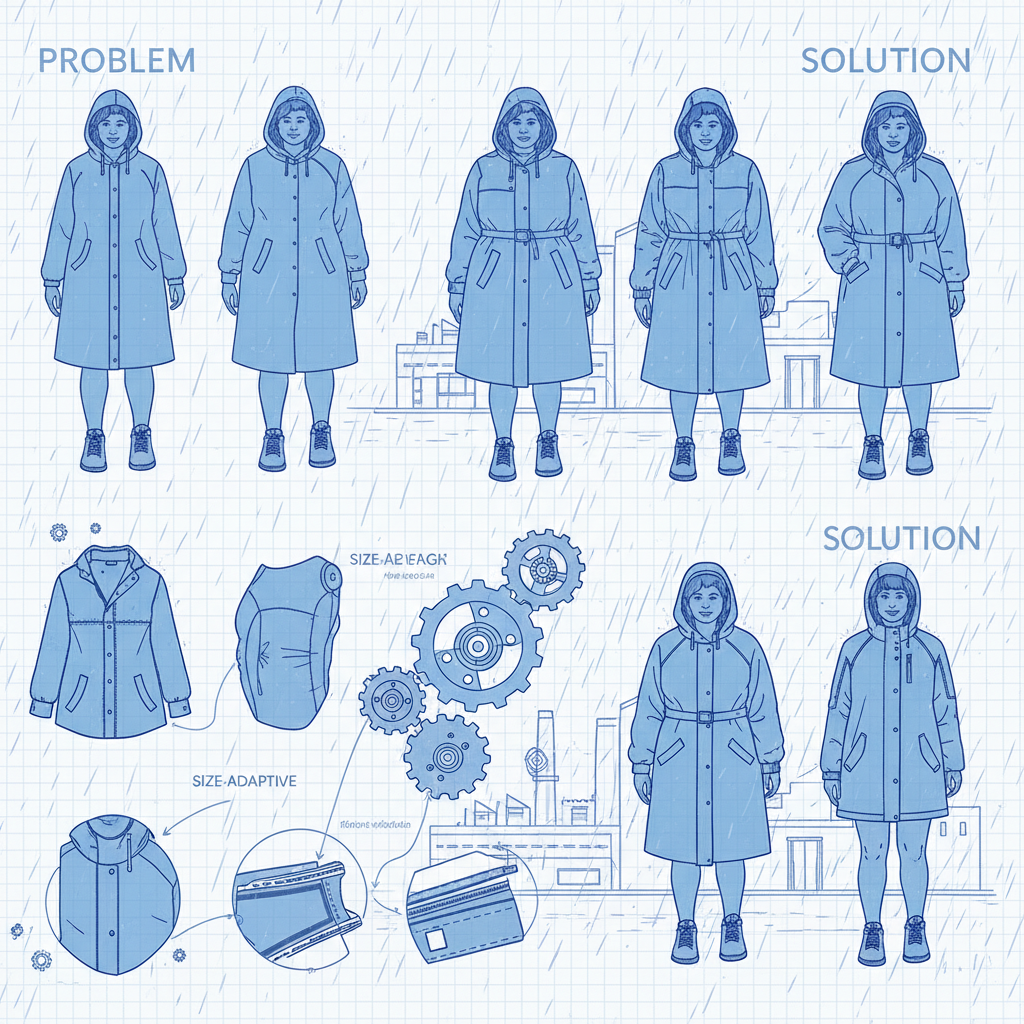
True petite engineering goes far beyond shortening the hemline. For petite women's raincoats, the process involves a comprehensive recalibration of the garment's center of gravity. This means adjusting the armhole height to prevent bunching under the arms and shifting the waistline upward to ensure the silhouette aligns naturally with a shorter torso, preventing the "swallowed by fabric" effect common in standard sizing.
By utilizing 3D body scanning and precise pattern grading, manufacturers can ensure that the slope of the shoulders is accurately represented. This technical approach ensures that the waterproof integrity of the coat is maintained; when a coat fits properly, there are fewer gaps for wind and rain to penetrate, significantly increasing the overall utility of the garment.
Essential Material Science for Waterproofing
The efficacy of any rain-ready garment depends on the synergy between the outer shell and the internal membrane. In the production of petite women's raincoats, the choice of fabric is critical because heavier materials can often overwhelm a smaller frame. The industry has shifted toward high-density lightweight polyesters and recycled nylons treated with PFC-free Durable Water Repellent (DWR) finishes.
Breathability is the second pillar of material science. Using microporous membranes allows moisture vapor to escape from the inside while blocking liquid water from the outside. This is particularly important for petite users who may experience more heat buildup if the garment is too voluminous or lacks strategic ventilation, making the integration of underarm eyelets or back vents a technical necessity.
Furthermore, the seam-sealing process determines the longevity of the coat. Heat-taped seams ensure that the stitching points—the most vulnerable areas for leaks—are completely waterproofed. For petite sizes, where the number of seams is often higher due to more complex tailoring, precision taping is the difference between a professional-grade raincoat and a basic fashion piece.
Ergonomic Design Factors in Petite Fit
Ergonomics in petite women's raincoats focuses on the relationship between movement and protection. A primary concern is the sleeve length; standard sleeves often cover the palms, which can be a safety hazard and a nuisance. Precision-cut sleeves ensure the wrist cuff hits exactly where it should, maintaining a seal against the rain without obstructing hand movement.
The distribution of weight is another critical ergonomic factor. Because petite frames have a different balance point, the placement of pockets and the weight of the hood are carefully considered. Heavy hoods can pull a petite coat backward, compromising the closure at the neck; therefore, lightweight, adjustable hoods are implemented to ensure a secure fit that doesn't distort the garment's shape.
Finally, the "sweep" or the flare of the coat is adjusted. A standard A-line cut can look like a dress on a petite woman. By narrowing the flare and optimizing the drape, petite women's raincoats achieve a sophisticated professional look while still allowing enough room for layering sweaters or blazers underneath during colder rainy seasons.
Performance Comparison of Petite Rainwear Styles
Different urban and rural environments require different styles of waterproof protection. For the professional commute, a structured petite trench coat offers the best blend of formality and function. In contrast, for outdoor activities or heavy downpours, a petite hooded parka provides maximum coverage and warmth, utilizing longer lengths that are still proportionally tailored to avoid dragging.
The choice between a hard-shell and a soft-shell petite raincoat depends on the expected intensity of the weather. Hard-shells are impervious to heavy rain but can be stiffer, whereas soft-shells offer more flexibility and breathability for light showers, making them ideal for active commutes.
Performance Rating of Petite Women's Raincoat Variations
Global Market Applications and Use Cases
The application of petite women's raincoats spans various global sectors. In high-precipitation urban centers like London, Tokyo, and Seattle, the demand is driven by the "commuter culture," where women require waterproof gear that fits perfectly over business attire without appearing bulky. The focus here is on sleek silhouettes and quick-dry technology.
Beyond the city, specialized petite rainwear is increasingly utilized in industrial and field-work settings. Women working in environmental science, forestry, or agricultural inspection often find that standard unisex or "regular" women's gear is too large, leading to snagging risks or reduced mobility. Tailored petite waterproofs provide the necessary safety and agility required for remote industrial zones and field research.
Sustainability and Ethical Production Trends
The modern textile industry is moving toward a circular economy, and the production of petite women's raincoats is no exception. By utilizing recycled ocean plastics (rPET) for the outer shells, manufacturers are reducing the carbon footprint of rainwear. This shift is driven by a consumer base that values ecological responsibility as much as a perfect fit.
Ethical manufacturing also extends to the reduction of textile waste. Because petite patterns are smaller, optimized nesting software is used during the cutting phase to ensure that fabric scraps are minimized. This precision not only lowers the cost of production but also aligns with global ISO standards for sustainable manufacturing.
Furthermore, the move toward "slow fashion" encourages the creation of timeless, durable pieces. A high-quality, perfectly fitted petite raincoat is designed to last for a decade rather than a season, reducing the overall volume of clothing ending up in landfills and promoting a more sustainable approach to waterproof apparel.
Future Innovations in Adaptive Rainwear
The future of petite women's raincoats lies in the integration of smart materials and adaptive design. We are seeing the development of "shape-memory" fabrics that can subtly adjust their fit based on body heat or humidity, ensuring that the garment remains snug and waterproof regardless of the layering underneath.
Digital transformation is also playing a role through virtual fitting rooms. AI-driven sizing tools allow petite customers to upload their measurements and see a 3D rendering of how a specific raincoat will drape on their frame. This eliminates the guesswork of online shopping and drastically reduces return rates for manufacturers.
Additionally, we anticipate a rise in modular rainwear—coats with detachable sections (such as adjustable hems or sleeves) that allow a single garment to be customized for different weather intensities. This modularity ensures that the petite fit is maintained while providing maximum versatility for the wearer.
Analysis of Technical Specifications for Petite Rainwear Innovations
| Innovation Tech |
Primary Benefit |
Fit Impact |
Sustainability Score |
| Recycled Nylon 6.6 |
High Durability |
Lightweight Drape |
9/10 |
| PFC-Free DWR |
Eco-Friendly Repellency |
No Change |
10/10 |
| 3D Body Mapping |
Precision Fit |
Optimized Proportions |
8/10 |
| Shape-Memory Fabric |
Dynamic Adjustment |
Self-Correcting Fit |
7/10 |
| Modular Hem Systems |
Versatile Length |
Customizable Height |
9/10 |
| Laser-Cut Seams |
Reduced Bulk |
Sleeker Silhouette |
8/10 |
FAQS
A petite fit is not just a shorter version of a standard coat. It involves adjusting the proportional balance of the entire garment. This includes raising the waistline, shortening the shoulder-to-waist measurement, narrowing the shoulder width, and adjusting the sleeve length and armhole height to ensure the garment sits naturally on women typically 5'4" (162cm) and under.
Yes, absolutely. The waterproof capabilities depend on the fabric (e.g., Gore-Tex, recycled polyester) and the seam-sealing technology, not the size of the garment. In fact, a properly fitted petite raincoat often provides better protection because it eliminates excessive fabric that can trap water or create gaps where wind and rain can enter.
If you find that your sleeves are always too long or that the waist of your coat hits at your hips rather than your natural waist, you need a petite fit. Standard "small" sizes reduce the width but not the length or the proportions, whereas petite sizing addresses the height and structural scale of the body.
Yes, high-quality petite raincoats are designed with "ease" in mind. Expertly tailored versions provide enough room in the chest and sleeves for a sweater or light jacket while maintaining a streamlined exterior. We recommend checking the size chart for "bust" and "shoulder" measurements to ensure room for layering.
Breathability is achieved through microporous membranes that allow water vapor to escape. Our petite raincoats utilize advanced breathable materials and strategic ventilation (such as underarm eyelets) to prevent the "greenhouse effect," ensuring you stay dry from both external rain and internal perspiration.
To maintain the DWR (Durable Water Repellent) coating, avoid frequent washing with harsh detergents. Use a specialized technical wash and tumble dry on low heat if the care label allows, as heat often reactivates the water-repellent finish. Always ensure the coat is completely dry before storing it to prevent mildew.
Conclusion
The evolution of petite women's raincoats represents a critical intersection of textile engineering, inclusive design, and market demand. By focusing on proportional accuracy—rather than simple downsizing—the industry has provided shorter women with outerwear that offers genuine protection without sacrificing professional aesthetics. From the implementation of PFC-free materials to the use of 3D body mapping, the focus has shifted toward a holistic approach where fit and function are inextricably linked.
Looking forward, the integration of adaptive fabrics and AI-driven sizing will further refine the user experience, making perfectly fitted waterproof gear accessible to all. For those seeking a blend of durability, style, and ergonomic precision, investing in specialized petite rainwear is the most effective way to navigate unpredictable weather with ease. We invite you to explore the pinnacle of rainwear engineering and find your perfect fit today. Visit our website: www.sxzyraincoat.com